
Fur Coat vs. Down Coat: Which Keeps You Warmer?
Let’s clear one thing first: when people talk about fur coat vs down jacket warmth, they want one clear answer - this or that. However, they can’t be categorized as to which one is better than the other. Both of these winter favorites are excellent at holding heat, but they do it in very different ways. One depends on nature’s dense protective layers, while the other utilizes lightweight loft to lock in warmth.
A fur coat wraps you in what many designers call a "thermal cocoon": a rich layer that helps block cold air and winter gusts. A down coat, in contrast, wraps you in a cloud-like layer of air that traps body heat inside. That is why both have remained popular for decades in harsh conditions.
Of course, they both can be your winter wardrobe essentials, but if you’re looking for only one, the choice depends on how and where you plan to wear it. To make things simpler, this guide breaks it all down in an easy way.
- No confusion.
- No heavy science talk.
Just clear points so anyone can quickly understand and decide what works better in snow, wind, and icy mornings.
How Fur Coat vs Down Jacket Warmth Works in Real Winter Conditions
Having thick clothes isn’t enough for warmth. It is about how well heat stays trapped inside the clothing. A fur coat protects you from cold weather with its dense layers of fur that act like a built-in heat bubble. Down jackets keep you warm by using fluffy material that traps warm air around your body like a soft heat blanket.
Simply put:
- Furs block wind naturally with their outer layer
- Down focuses on lightweight heat trapping inside
Common Aspect:
- Both try to keep body heat from escaping
The idea of natural fur insulation vs synthetic fabric often comes up here. Natural fur has a layered structure that works in strong wind, while faux versions copy that fluffy air-trap effect. Both feel warm, but the texture and airflow behavior are different. That is why people in freezing regions often prefer a real fur coat for stronger coverage.
On the contrary, down works best when movement matters. Such as walking, travelling, or any outdoor activity, as it is light in weight. Fur feels heavier, comparatively, but gives a strong “sealed warmth” feeling.
Warmth in Different Weather Zones

The winter season isn’t the same everywhere. Some places are wet and windy, while others are dry and icy. This is where performances switch.
- Fur feels stronger and more sealed during dry, cold weather
- Down performs better with treated outer layers in wet snow conditions
- Fur performs especially well on windy streets because it blocks air more naturally
- On active days like outdoors, down stays lighter and easier
A simple way to understand fur coat vs down jacket warmth is to think of down as a heater and fur as a shield. One creates soft insulation pockets, while the other acts as a shield against the cold.
Fur coat warmth rating in Celsius and Fahrenheit varies depending on density, but a high-density real fur coat for men and women can handle extreme sub-zero conditions with stable heat retention. Down jackets can also reach similar warmth, but it depends on the fill strength.
So, the debate on the best coat for extreme cold fur or down boils down to figuring out that fur often feels more stable in harsh wind chill. Down is often the better choice for daily movement.
How It Feels in Real Life (Not Just on Paper)
When going out in freezing cold air, you’ll notice the difference pretty fast. The down coat does not feel super warm immediately; however, it slowly traps body heat inside. After a short period, it becomes a soft, cozy, and very comfortable layer. It also feels light, so moving around becomes easier.
Fur usually feels warm almost right away because it blocks cold wind the moment it is worn. It feels like a thick warm layer wrapping around the body. This is where fur coat vs puffer jacket warmth becomes easy to notice in real life.
Choosing the best coat for extreme cold, out of fur or down, usually depends on the activity of the day:
- Standing outside for a long time? Go for fur as it feels warmer and more protective
- On the go? Get yourself a down for lightweight and easy layering
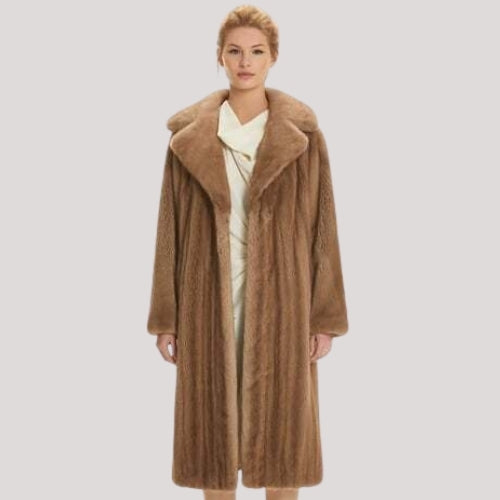
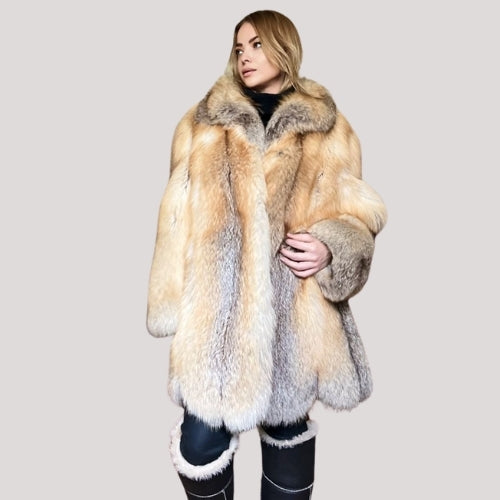
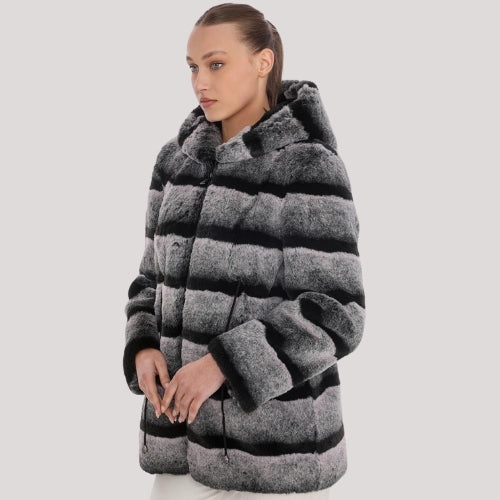
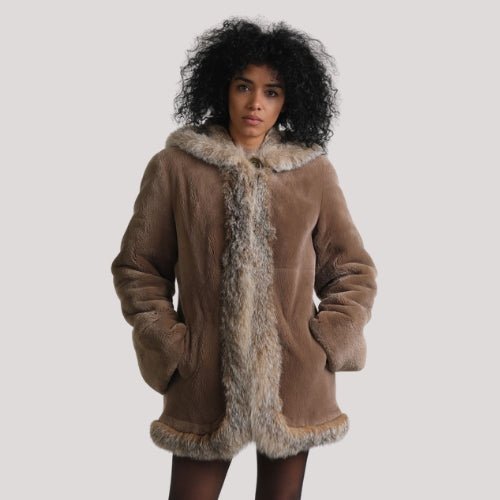
For those who only love the idea of fur outerwear no matter what, different styles of fur pieces exist for you. A woman's fur coat or a man’s fur coat is often used for very cold days when exceptional warmth is needed. Lighter options like a women’s fur jacket or a men's faux fur coat are better when comfort and easy movement matter more.
Quick Winter Breakdown Comparison Table
Both options are strong winter players, just built for different lifestyles. Here’s a review:
|
Feature |
Fur Coat |
Down Jacket |
|
Warmth feel |
Dense and steady |
Light and airy |
|
Wind protection |
Very strong |
Moderate |
|
Weight |
Heavier |
Lighter |
|
Movement ease |
Limited |
High |
|
Packability |
Low |
High |
|
Cold performance |
Excellent in dry cold |
Excellent in mixed cold |
FAQ
Is a fur coat warmer than a down jacket?
It depends on the weather and how the outerwear is being used. In fur coat vs down jacket warmth discussions, people who have used both the clothing pieces prefer fur for utmost warmth during strong winds and very cold temperatures. Down, however, offers an excellent warmth-to-weight ratio, which makes it lighter and easier to carry.
Is a vintage fur coat warmer than a modern down coat?
Not really. Modern down coats are made with advanced insulation and can be incredibly warm. However, a pristine vintage fur often feels warmer outdoors because it creates a more sealed barrier against the cold.
What's the best type of fur available?
There isn't just one type of best fur available. Besides, among the top-tier choices, chinchilla fur, mink fur, and fox fur are a few to name that come with style, luxury, and warmth.